Logistics trends 2026 with AI, fleet optimization, and location data

Supply Chain Trends 2026: How AI, Real-Time Data, and Location Intelligence Are Reshaping Logistics

The logistics industry is entering a new phase. In 2026, supply chains are no longer competing on price alone — they compete on speed, predictability, and resilience.

Shippers expect real-time visibility. Customers demand accurate ETAs. Fleet operators face constant fuel volatility, driver shortages, and tighter sustainability requirements. At the same time, global disruptions are not slowing down.

That’s why supply chain strategies in 2026 are being rebuilt around one key idea:

real-time decision-making powered by AI and location intelligence.

Below are the most important supply chain trends for 2026 and what they mean for transport companies, fleet platforms, and logistics software providers.

1. AI-Driven Planning Becomes a Standard (Not a Competitive Advantage)

For years, AI in logistics was seen as an innovation project. In 2026, it is becoming a requirement.

Companies are adopting AI not only to optimize routes, but also to:

  • forecast delays and disruptions

  • predict demand fluctuations

  • optimize inventory placement

  • automate dispatch planning

  • reduce empty miles

  • improve capacity utilization

The biggest shift is that AI is moving upstream. Instead of reacting to problems, supply chains are becoming predictive.

Why this matters

In logistics, small improvements compound quickly. A 2% increase in fleet utilization or a 10-minute improvement in ETA accuracy can translate into major savings at scale.

In 2026, the most successful operators are those who integrate AI directly into their operational workflows — not as a dashboard, but as a decision engine.

2. Real-Time Visibility Is Becoming a Customer Expectation

Real-time tracking is no longer a “nice-to-have” feature. Shippers, carriers, and end customers expect continuous visibility.

However, visibility in 2026 means more than GPS dots on a map.

Modern supply chain visibility includes:
• live vehicle positioning
• traffic and road disruptions
• weather impact forecasting
• predictive ETAs
• delivery milestone automation
• anomaly detection (unexpected stops, detours, route deviations)

Companies that still rely on manual status updates are losing competitiveness quickly.

The challenge

Visibility depends on data quality. And data quality depends on mapping accuracy.

If your routing system uses consumer-grade maps, you may still display location — but your ETAs and operational planning will be unreliable.
3. Routing Is Shifting From “Fastest” to “Most Operationally Efficient”

Traditional routing focuses on shortest or fastest travel time. But supply chain routing in 2026 focuses on operational outcomes.

Modern fleets optimize routes based on:
• toll cost balancing
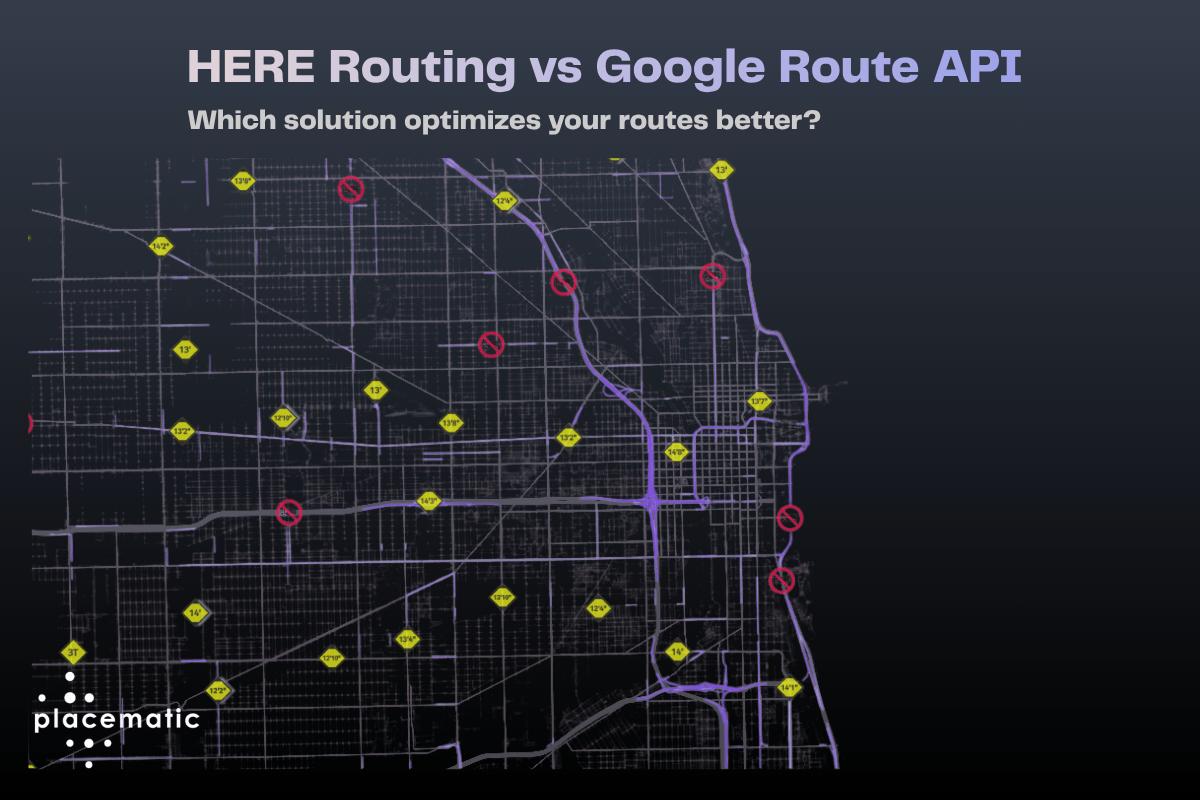
• road restrictions for trucks
• vehicle dimensions and weight
• hazmat compliance
• time-dependent traffic profiles
• delivery windows
• driver hour constraints (HOS)
• sustainability targets (CO₂ reduction)

In other words: routing is no longer a navigation problem.

It is now a fleet efficiency problem.

Why it matters

Consumer map APIs often return routes designed for passenger cars. That leads to operational issues such as:
• truck-incompatible roads
• inaccurate ETAs
• missed delivery windows
• unexpected toll expenses
• compliance risk

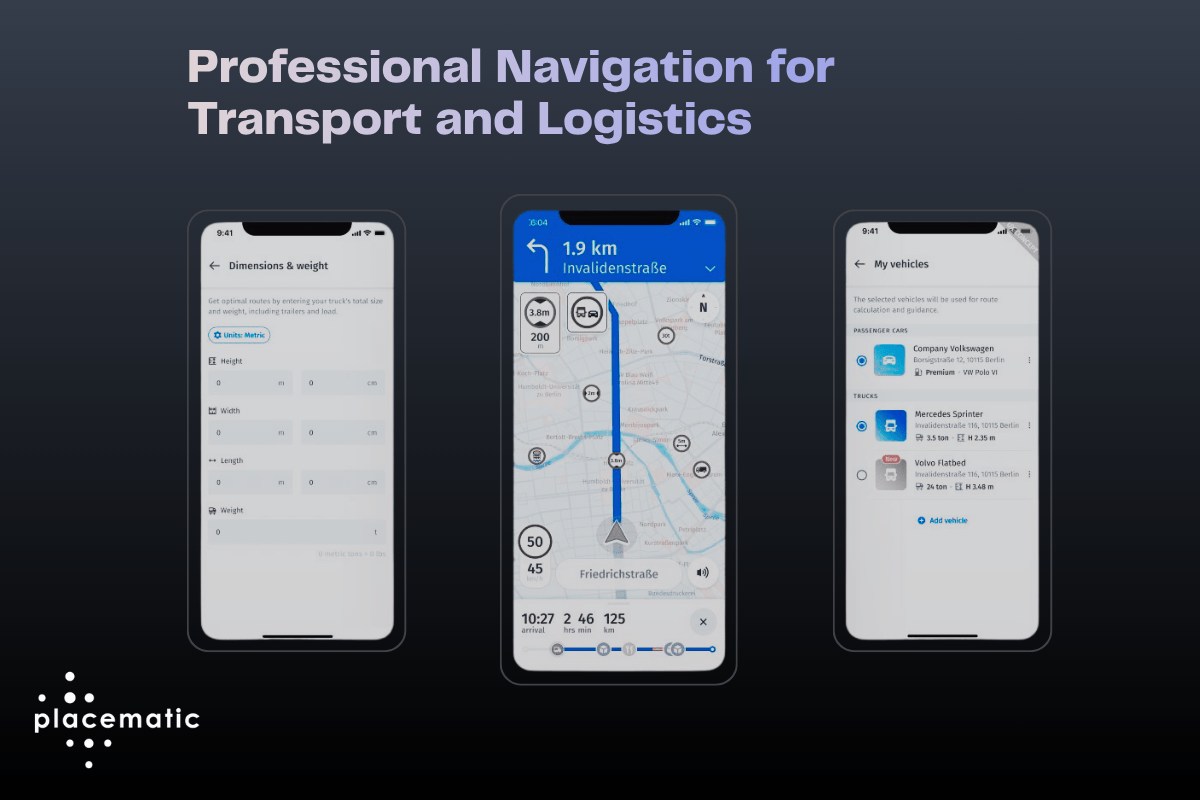
In 2026, fleets need truck-grade routing and enterprise-level map intelligence.

4. Sustainability Becomes a Supply Chain KPI (Not a PR Metric)

Sustainability is now a measurable operational requirement. In many industries, it’s becoming part of procurement decisions.

More companies are tracking:
• CO₂ emissions per delivery
• fuel usage per kilometer
• idle time per vehicle
• route efficiency benchmarks
• emissions reduction targets

As a result, route optimization is no longer only about cost reduction — it’s also about carbon reduction.

Key takeaway

The easiest sustainability wins come from operational efficiency:
• reducing empty miles
• minimizing detours
• optimizing vehicle usage
• reducing idle time

AI routing has become one of the fastest ways to deliver sustainability improvements without disrupting operations.

5. Digital Twins and Simulation Models Enter Logistics Planning

Digital twins are becoming more common in supply chain operations. In 2026, logistics providers use simulation models to test scenarios before real-world disruptions happen.

Examples include:
• rerouting plans in case of border congestion
• warehouse relocation impact analysis
• fleet expansion scenario planning
• demand peak forecasting
• disruption response simulation

Digital twins require strong geospatial foundations.

Without accurate road networks, traffic models, and historical speed profiles, simulations are simply unreliable.

That’s why location intelligence is becoming the backbone of supply chain forecasting.

6. Last-Mile Delivery Continues to Be the Most Expensive Segment

Despite automation and better technology, last-mile delivery remains one of the most costly parts of logistics.

In 2026, operators are focusing on:
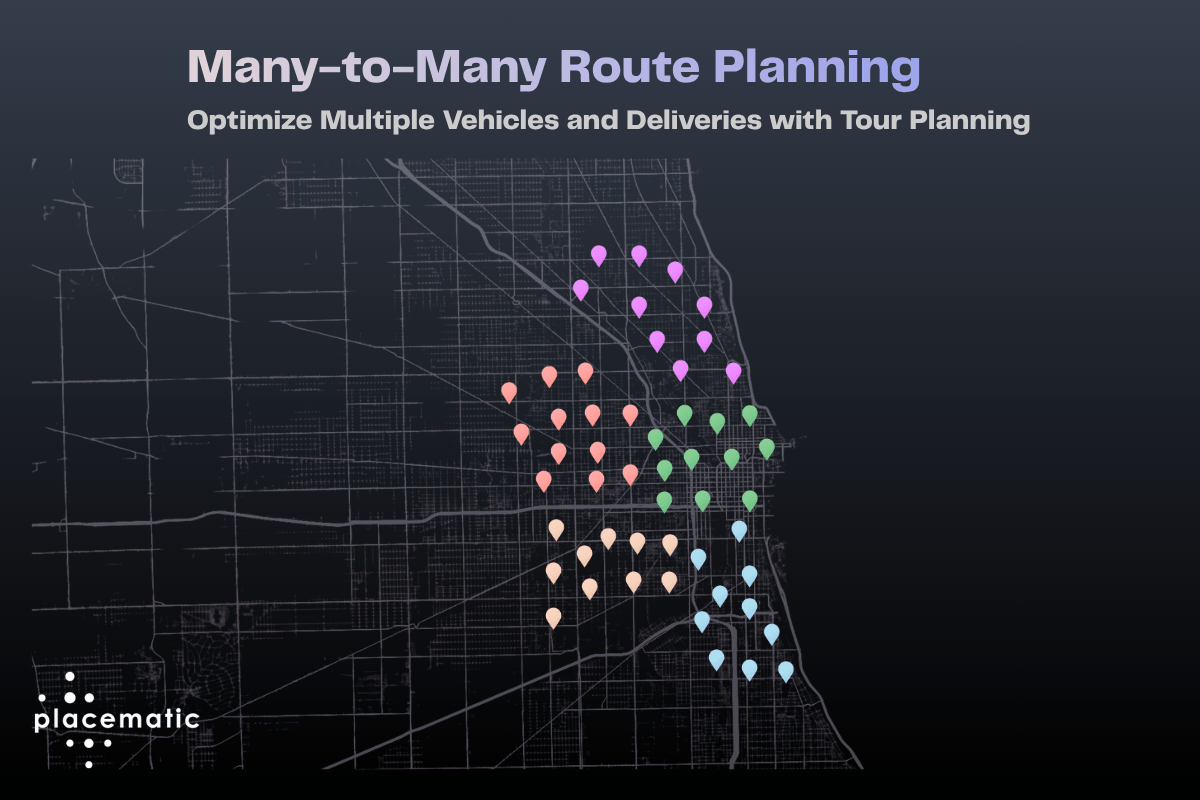
• multi-stop route optimization
• accurate delivery window prediction
• dynamic rerouting during the day
• customer communication automation
• micro-fulfillment and regional hubs

Last-mile optimization is a data problem — not a driver problem.

Better routing intelligence, traffic prediction, and address quality significantly improve delivery performance.

8. API-Based Logistics Platforms Scale Faster Than Traditional Systems

One of the most important trends in 2026 is that logistics technology is increasingly modular.

Instead of buying monolithic software, companies are integrating APIs:
• Routing API
• Matrix Routing API
• Geocoding API
• Traffic API
• Fleet Telematics API
• Navigation SDKs

This API-based approach enables faster innovation and easier scaling.

It also means supply chain platforms must choose technology partners carefully — because at scale, API costs can explode.

9. Cost Pressure Is Driving a Shift Away From Consumer Map APIs

A growing number of fleet platforms are moving away from consumer-focused map providers.

The reason is simple: routing and map usage costs scale exponentially with volume.

When you reach tens of thousands or millions of routing requests per month, pricing becomes a strategic issue.

Fleet and ELD platforms increasingly look for:
• predictable pricing models
• enterprise SLA
• commercial vehicle routing
• stable API terms
• global coverage
• real-time traffic and restrictions

In 2026, routing cost optimization is becoming a key part of platform architecture.

10. Location Intelligence Is Becoming the Core of Supply Chain Technology

The biggest trend in 2026 is that location intelligence is no longer a supporting feature.

It is becoming the operational foundation for:
• routing
• dispatch planning
• fleet tracking
• ETA forecasting
• delivery optimization
• warehouse planning
• territory management
• supply chain risk monitoring

Companies that treat maps as “just a UI element” will fall behind.

Companies that treat maps as a decision engine will scale faster, operate cheaper, and deliver better service.

How Placematic Supports Supply Chain Platforms in 2026

Placematic helps transport and logistics platforms integrate advanced routing and mapping infrastructure using HERE Technologies.

We support projects that require:
• truck-grade routing (height, weight, hazmat restrictions)
• routing cost optimization at scale
• traffic-aware ETA and dispatch planning
• geocoding and address validation
• location intelligence for fleet systems
• API-based integration with enterprise SLA

If you’re building or scaling a supply chain platform in 2026, we can help you reduce operational cost and improve routing performance.

👉 Learn more about transport & logistics solutions:
https://placematic.com/maps-for-transport-and-logistics/

Final Thoughts: Supply Chains in 2026 Are Built on Data and Predictive Decisions

Supply chain management is becoming more complex — but also more intelligent.

In 2026, winning logistics organizations will be the ones that:
• move from reactive planning to predictive operations
• adopt AI as a decision engine
• improve map and routing data quality
• scale with modular APIs
• reduce cost per mile while improving delivery performance

The future of supply chains is not just about trucks, warehouses, and drivers.

It’s about real-time data and location intelligence.


AI Fleet Optimization: Real Cost Savings Benchmarks

KPI / Metric Traditional Routing AI-Driven Routing
Annual fuel consumption baseline – 15–25%
Empty miles reduction baseline –20% to –35%
Dispatch planning time 45–60 min/day 5–10 min/day
ETA accuracy moderate up to 60% improvement
Fleet utilization 65–75% 85–95%

Many fleets report that AI-driven optimization can reduce fuel consumption by 18–23% annually, primarily by minimizing detours, idle time, and inefficient routing decisions.

Fleet Cost Breakdown: How AI Impacts Operating Expenses

Category KPI without AI KPI with AI
Vehicle utilization rate 65–75% 85–95%
Incremental planning (scenarios) limited + 4–6 automated scenarios
Unprofitable miles 15–22% <10%
Routing including ADR/HOS NO YES (real time)
  • In real-world implementations, deadheading (driving without a load) has been reduced by up to 35% thanks to intelligent task assignment and real-time routing.
  • Logistics companies report 20–30% improved vehicle utilization after AI integration.

What awaits the logistics industry in 2026?

  • 85% of logistics companies plan to invest in AI tools for routing and cost prediction in the next 24 months (source: Gartner Supply Chain Survey 2025).
  • Over 60% of transportation companies believe that AI technologies will be key to competitive advantage by the end of 2026 (Deloitte).
  • AI in route planning, taking into account vehicle constraints (HOS/ADR/tonnage), not just distance, is becoming a technological standard.

Design the future of your logistics today with Placematic

In a world where variability is the norm and customer expectations are rising, supply chain resilience is becoming a cornerstone of competitiveness. Are your logistics solutions ready for 2026?

Placematic as a trusted Partner

Placematic is a certified HERE Gold Partner, trusted by enterprises worldwide for delivering high-quality HERE solutions. In addition, our team combines deep technical expertise with hands-on experience to help businesses in logistics, mobility, retail, and real estate successfully adopt and integrate HERE Maps and Location Services.

10+ years
with HERE
50+
projects

1B+

API calls
served yearly

10+

industries
covered

20+

certified
specialists

Related Post