Many-to-Many Route Optimization: How to Plan Multiple Vehicles and Deliveries Efficiently

Many-to-Many Route Planning: How to Optimize Multiple Vehicles and Multiple Loads at Scale

Learn how many-to-many tour planning helps logistics teams optimize multiple vehicles and multiple loads, reduce costs, improve on-time delivery, and scale operations with Tour Planning.

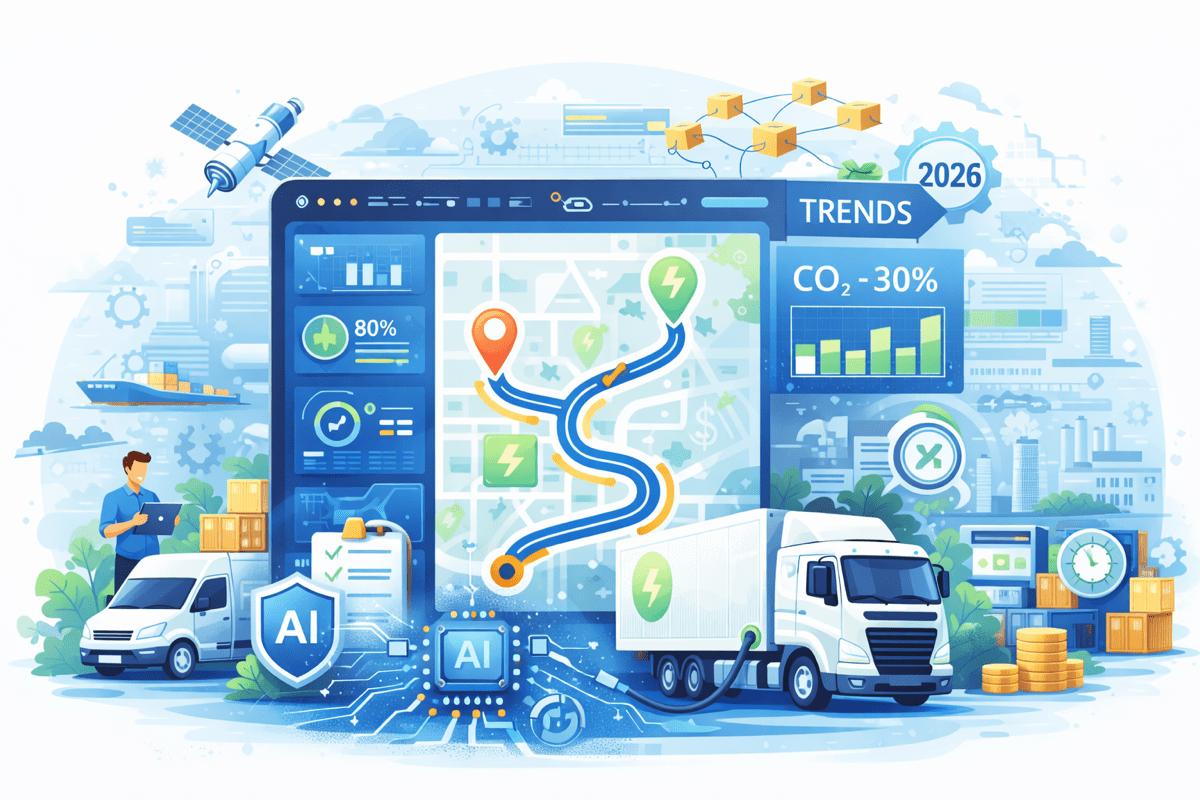
As we noted earlier in Logistics & Fleet Management Trends for 2026, routing is no longer just about finding the fastest path between two points. In modern logistics, location intelligence has become a decision engine for dispatch planning, ETA forecasting, fleet tracking, and delivery optimization. That shift becomes even more important when the real problem is not one route for one driver, but dozens or hundreds of jobs that must be distributed across an entire fleet. 

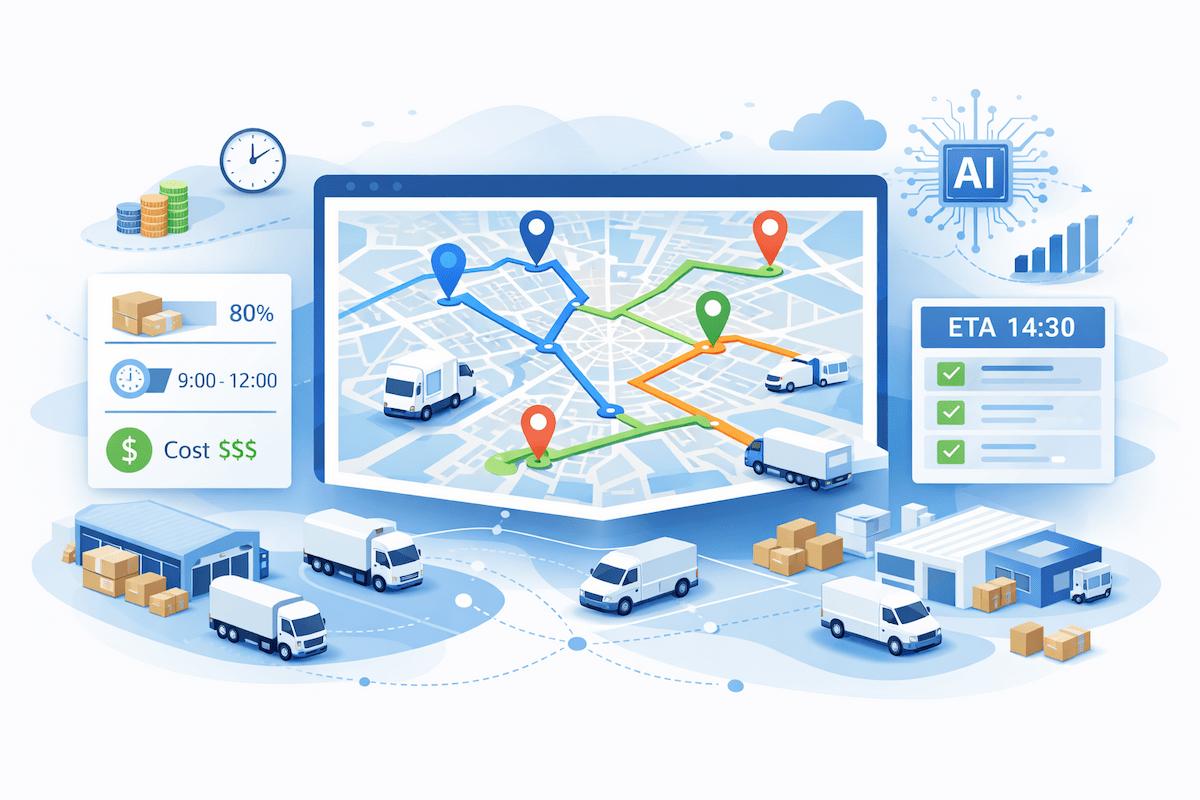
That is exactly where many-to-many route planning comes in. In HERE’s terminology, Tour Planning is a many-to-many route optimization service for moving people, goods, and services from A to B, designed to improve fleet utilization and support customizable en-route optimization. The developer documentation describes it as solving the full vehicle routing problem for multiple vehicles visiting multiple locations under real-world constraints such as capacity and delivery time windows.

Why many-to-many planning is so difficult

In a many-to-many environment, the challenge is not simply to sort stops into a sequence. The challenge is to decide which vehicle should take which jobs, in which order, under which constraints, at what cost, and with what impact on service levels. Once you add driver shifts, multiple depots, delivery windows, vehicle capacity, traffic, job priorities, and changing road conditions, the problem quickly becomes too complex for spreadsheets or one-route-at-a-time dispatching. 

This is why manual planning often creates hidden inefficiencies. Dispatchers may build workable plans, but not necessarily optimal ones. That can lead to empty miles, underused vehicles, missed time windows, unnecessary overtime, avoidable fuel spend, and poor ETA accuracy. In same-day and next-day delivery environments, these gaps compound even faster because the plan must keep changing during the day. HERE’s own same-day delivery case study highlights exactly these issues: manual fleet planning was time-consuming and error-prone, while the business needed to increase predictable delivery volume, reduce distance, lower fuel use, and cut CO2 emissions. 

The core challenge: one network, many constraints

For most logistics companies, many-to-many optimization usually means balancing several decision layers at once:
Assignment: which load, order, or service job should be handled by which vehicle.
Sequencing: in what order should each vehicle complete its assigned work.
Feasibility: whether the plan respects capacity, time windows, shifts, breaks, vehicle type, and job-specific restrictions.
Economics: whether the resulting tours minimize total cost, distance, duration, fleet count, or a combination of business objectives.  

That is why many-to-many planning is better understood as fleet orchestration rather than simple routing. A routing engine can tell one driver how to get from stop A to stop B. A tour planning engine decides how the entire fleet should operate over the whole shift.  

How tour planning solves the problem

Tour planning solves this by taking the full operational problem as input and generating a cost-effective set of tours for the available fleet. The algorithm can organize jobs into tours for each vehicle while considering parameters such as time windows, job requirements and priorities, driver qualifications, vehicle capabilities, range, and traffic information. It can be used for next-day planning, shift planning, and real-time replanning when conditions change during the day.  

On the Placematic HERE Tour Planning page, this is positioned as a way to plan multi-stop routes, optimize schedules, reduce delivery downtime, and calculate and dispatch thousands of deliveries within a working shift across your fleet in a single request. Placematic also highlights that the solution supports dynamic route replanning, multi-vehicle scheduling, and scalable tour planning across regions.  

In practice, tour planning does three things at once:
1. It matches jobs to the right vehicles.
2. It builds the most efficient tour for each vehicle.
3. It re-optimizes the plan when something changes, such as a new order, traffic disruption, or shift issue.  

What can be included in a many-to-many tour planning calculation?

This is the section many logistics teams care about most: what exactly can the system take into account when calculating a plan?

In HERE Tour Planning, the answer is broad. The API can model a wide range of fleet, job, timing, and cost rules, so the optimizer works on your real operating conditions rather than an oversimplified routing problem.  

1. Jobs, tasks, pickups and deliveries

You can optimize classic delivery jobs, pickup jobs, and combined pickup-and-delivery jobs. The documentation also supports multi-jobs, including scenarios with multiple pickups and deliveries inside a single job, as well as alternative locations for the same task when there is more than one valid place to serve it. Jobs can be grouped so they stay together, prioritized so the solver tries harder not to drop them, and constrained with task positions such as first, last, any, or ordered. You can also define max time on vehicle for sensitive shipments.  

2. Time windows, shifts and service time

The optimizer can account for multiple time windows on jobs, vehicle shift start and end times, multiple shifts per vehicle, breaks, and departure times. It can also support reloads, which allow a vehicle to perform additional trips within the same tour if serving all jobs in one run is not feasible. For more granular field operations, HERE also documents vehicle-dependent stop base duration, which is useful when service time at a stop differs by vehicle type or when multiple jobs are handled at the same location.  

3. Fleet configuration and vehicle logic

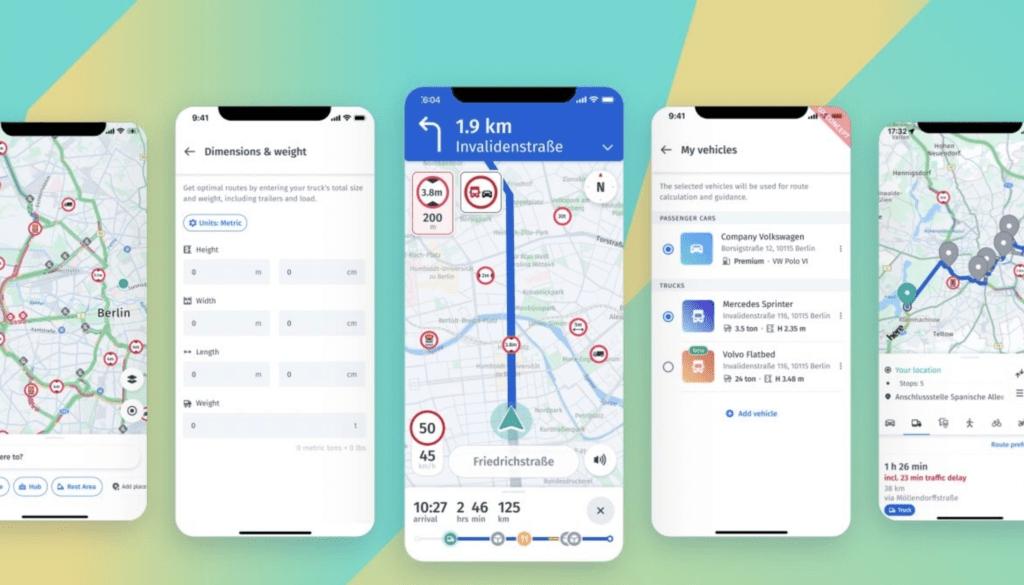
HERE Tour Planning supports heterogeneous or mixed fleets, including different vehicle profiles, capacities, quantities available, running costs, shift windows, limits on stops and distance, and territories where each vehicle may operate. Jobs can also require specific skills or driver/vehicle capabilities, which is especially relevant for refrigerated vans, specialized trucks, or regulated cargo. The Placematic product page also highlights multi-depot and open route planning, including scenarios where drivers do not need to return to their depot of origin.  

4. Capacity, demand and load compatibility

The API supports capacitated vehicle routing, including multidimensional demand such as weight, volume, size, or quantity. It also supports mixed-load restrictions through categories and mixing rules, which can be used to prevent incompatible goods from traveling together. This is valuable when you need to separate product classes such as chilled goods, fragile items, hazardous materials, or other cargo types that should not share a tour or vehicle load.  

5. Territories, sequencing and job relations

Jobs can be assigned to territories, and vehicles can be restricted or incentivized to serve those territories. The system also supports relations that control how specific jobs must be executed: for example, they can be forced to stay in a strict sequence, kept flexible within one vehicle, or treated as a dedicated tour relation. This is useful for planned milk runs, contractual service sequences, or business rules where some jobs must stay together.  

6. Real-world road intelligence

HERE Tour Planning uses HERE location services and routing intelligence, including real-time traffic. Tour plans can be based on real-time traffic and weather conditions, and can consider truck attributes when generating plans. The developer materials further reference route-avoidance settings and profile-based routing logic. This matters because the value of tour optimization depends heavily on the quality of the routing layer underneath it.  

7. EV and range-aware planning

For electric fleets, HERE supports range limits, charging en route, and the ability to align driver breaks with charging intervals. That makes tour planning more useful for mixed or transitioning fleets where internal-combustion and electric vehicles need different planning assumptions. HERE has also publicly highlighted EV-ready optimization and mixed-fleet capabilities in its Tour Planning communications.  

8. Optimization objectives

The API supports several explicit optimization goals, including:
• minimizeUnassigned
• minimizeCost
• minimizeDistance
• minimizeDuration
• optimizeTourCount  

That is important because not every business wants the same outcome. Some companies want to use the smallest possible number of vehicles. Others want the lowest total cost. Others want the best on-time performance, even if that means spending slightly more on distance.

9. Scale and execution mode

Tour Planning supports up to 250 tasks for the synchronous endpoint and up to 6000 tasks for the asynchronous endpoint. 

10. Advanced and emerging features

Clustering nearby stops as an alpha capability. In the use case example, clustering reduces the number of stops and can reduce travel time and fuel consumption by grouping nearby jobs into a single service cluster. For certain postal, parcel, and dense urban delivery scenarios, that can be a meaningful productivity lever.  
What are the business benefits of implementing tour planning?

The first benefit is better fleet utilization. When jobs are assigned across the whole fleet instead of one route at a time, you reduce empty runs, avoid underloaded vehicles, and make better use of each shift. Tour Planning as a way to improve fleet utilization, reduce downtime, lower operational cost, and minimize mileage. 

The second benefit is higher on-time performance. Because the optimizer works with time windows, shift constraints, traffic, and real-world routing logic, it becomes easier to build feasible schedules and keep ETAs realistic. HERE explicitly links Tour Planning to fewer missed delivery windows, higher delivery success rates, and more accurate ETAs through dynamic replanning. 

The third benefit is faster reaction to operational change. HERE’s materials emphasize dynamic replanning and in-transit tour optimization when new jobs arrive or conditions change. That is especially valuable in same-day, next-day, field-service, and last-mile operations where static morning plans are rarely enough. 

The fourth benefit is lower cost and better sustainability. Route efficiency, fewer detours, smarter assignment, and improved utilization translate directly into lower fuel spend, lower labor waste, and lower emissions. HERE’s same-day CEP case study specifically names cost, sustainability, reduced tour distances, reduced fuel consumption, and reduced CO2 emissions as part of the business objective. 

And the fifth benefit is that the gains are not just theoretical. In HERE’s case study of a leading Romanian courier company, ETA success improved from 46.2% to 95.8%, while average deliveries rose from 82 to 94 stops per vehicle per day, a 14.6% improvement, within ten months. The same case study also describes scaling from 10 couriers to 3,000 at peak moments to support growth. 

Estimate Your Tour Planning Costs

Why HERE Tour Planning

At product level, HERE Tour Planning is well positioned for this exact problem: multi-vehicle, many-to-many route optimization with operational constraints. We can describes the service as a way to improve fleet utilization through customizable many-to-many route planning, while its demo positioning emphasizes optimization based on time, cost, capacity, vehicle type, and more. Support for mixed fleets, pickups and deliveries, multi-depot and open routes, traffic-aware ETAs, and both synchronous and asynchronous execution modes. 

It also sits naturally inside the broader HERE Location Services ecosystem, where routing, geocoding, maps, traffic, and fleet optimization can work together. That is one reason HERE Tour Planning is often used alongside other HERE services such as Geocoding and Routing in operational delivery platforms. More broadly, HERE positions itself as a platform for building, deploying, and scaling location solutions.

Why implement it with Placematic

Technology alone is not the whole project. Real value comes from translating business rules into a correct optimization model, connecting the API to your platform, and validating the result against real operating data. That is where Placematic fits in. Placematic is as a geospatial software company building data-driven mapping applications. As a HERE Gold Partner helping businesses integrate HERE Location Services into applications across the USA and Europe.

Placematic has over a decade of HERE expertise, consulting and integration support, and local support for companies implementing routing, geocoding, map, and fleet optimization solutions.

Final Thoughts

Many-to-many route planning is no longer a niche optimization topic. It is becoming a core capability for transport, courier, last-mile, field-service, and distribution businesses that need to operate faster, leaner, and with better delivery precision. The more vehicles, loads, depots, time windows, and service rules you have, the less effective manual planning becomes — and the more valuable tour planning becomes. 

If your operation is moving beyond simple routing and into full-fleet orchestration, this is the right moment to look at HERE Tour Planning as part of a broader HERE Location Services strategy. And if you want an implementation partner that understands both the technology and the business side of location intelligence, Placematic is positioned to help you design, integrate, and scale the solution. 

Design the future of your logistics today with Placematic

In a world where variability is the norm and customer expectations are rising, supply chain resilience is becoming a cornerstone of competitiveness. Are your logistics solutions ready for 2026?

Placematic as a trusted Partner

Placematic is a certified HERE Gold Partner, trusted by enterprises worldwide for delivering high-quality HERE solutions. In addition, our team combines deep technical expertise with hands-on experience to help businesses in logistics, mobility, retail, and real estate successfully adopt and integrate HERE Maps and Location Services.

10+ years
with HERE
50+
projects

1B+

API calls
served yearly

10+

industries
covered

20+

certified
specialists

Related Post