Territory management
Geomarketing analytics
Store locator for your website
Geocoding, Routing & Territory Queries
Access to innovative location services
Estimate costs and get a quote
Address to coordinates
Real-time address autocomplete
Embeddable map tiles
Single and multi-stop routing
Maps for transport & logistics
Building fleet software or an ELD platform
Running a delivery network or distribution operation
Managing a multi-location retail or franchise network
Adding location features to a software product
Full HERE Location Services overview
Estimate costs
Get a quote
Truck-compliant routes with road restrictions
Multi-stop fleet route optimization
Bulk travel time and distance calculation
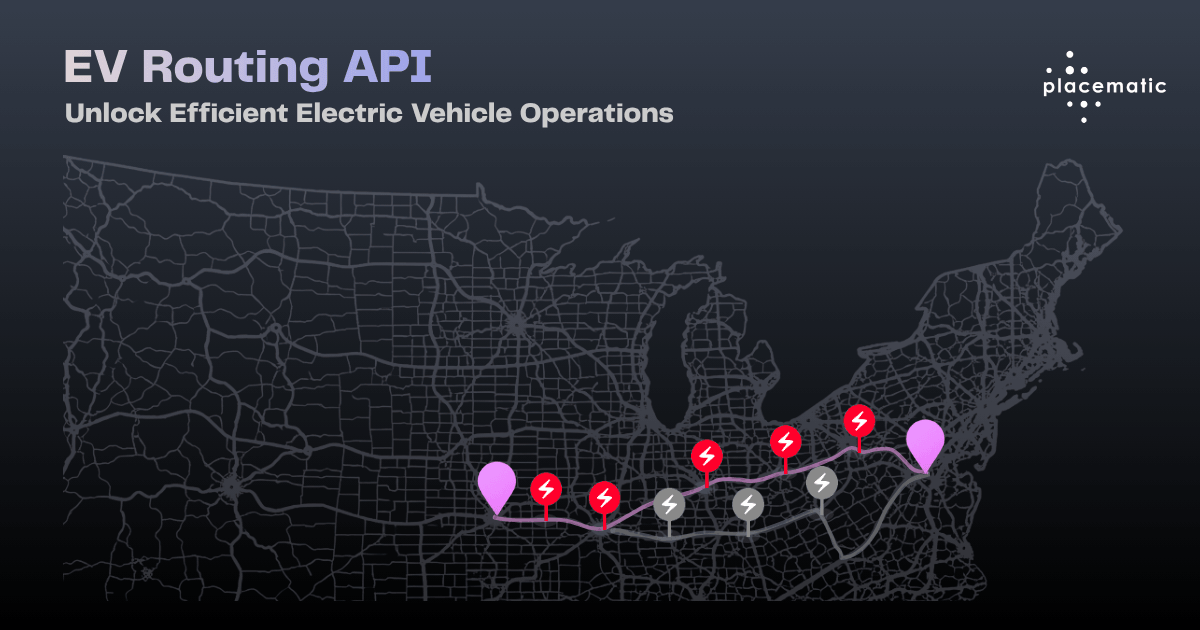
Energy-aware routing for electric vehicles
Travel-time service area calculation
Real-time traffic overlays and road incidents
High-resolution satellite and aerial imagery
Fleet-specific map rendering with truck restrictions
Address to coordinates at scale
GPS coordinates to structured address
Bulk address processing at enterprise scale
Search and discover millions of POIs globally
Hybrid GPS, Wi-Fi and indoor positioning
Multi-vehicle fleet tour optimization
Build map-powered iOS, Android and web apps
Fuel costs are one of the biggest challenges in the transport industry. Prices keep rising, routes are getting longer, and every minute spent in traffic translates into real financial loss.
That’s why more and more companies are turning to artificial intelligence (AI) for route planning and fleet management.This technology can reduce fuel consumption by up to 20% — without cutting down on the number of deliveries.
In the past, routes were planned once a day — based on maps and driver experience.Today, intelligent systems do it for us, analyzing real-time data such as traffic conditions, weather, roadworks, and even driver availability. AI doesn’t just plan the route — it continuously optimizes it whenever congestion, accidents, or other disruptions occur. As a result, fleets avoid situations where drivers waste valuable time and fuel in traffic simply because “that’s the way it’s always been done.”
In the past, routes were planned once a day — based on maps and driver experience.Today, intelligent systems do it for us, analyzing real-time data such as traffic conditions, weather, roadworks, and even driver availability.
AI doesn’t just plan the route — it continuously optimizes it whenever congestion, accidents, or other disruptions occur.
As a result, fleets avoid situations where drivers waste valuable time and fuel in traffic simply because “that’s the way it’s always been done.”
Fuel savings are achieved through a combination of smart, interconnected mechanisms that work together to make every route more efficient:
1. Driving Behavior Analysis
The system learns how each driver operates — who accelerates too aggressively, who brakes too often, and where unnecessary idling occurs.With this data, companies can conduct driver training and coaching based on real insights, not assumptions.In many cases, this alone can reduce fuel consumption by 10–15%.
2. Dynamic Route Planning
AI designs routes to minimize empty mileage and determine the most fuel-efficient order of deliveries.Even a small change in delivery sequence can lead to significant savings — especially for larger fleets, where every kilometer counts.
3. Vehicle Type Consideration
For mixed fleets — both combustion and electric — the system assigns tasks based on range, load, terrain, and temperature.This ensures that electric vehicles aren’t overused on energy-intensive routes, while combustion vehicles are deployed where they make the most sense.
4. Historical Data Analysis
Every trip generates valuable data that AI uses to learn and improve.Over time, the system can predict the most efficient combinations of routes, times of day, and vehicle types to maximize overall fuel efficiency.
Companies that have implemented AI in their fleet management report:
As a results, AI doesn’t just save fuel — it also improves driver comfort, operational efficiency, and the overall quality of customer service.
Moreover, It’s also crucial that your system supports dynamic rerouting — real-time route adjustments in response to changing road or traffic conditions.
Artificial intelligence in transport is no longer the future — it’s the present.Thanks to AI, fleets are becoming more profitable, sustainable, and predictable. The technology analyzes thousands of data points every second to help companies:
Using AI for route planning is one of the simplest and most effective ways to reduce fuel costs.You don’t have to revolutionize your entire fleet overnight — start with data analysis and gradually implement AI-driven solutions.
Every liter of fuel saved makes a tangible difference to your bottom line.And the sooner you begin adopting intelligent route optimization, the faster your company will see real, measurable results.
CEO and Co-Founder of Placematic USA — a Location Intelligence company building spatial APIs and geomarketing software for fleet tech and logistics teams. HERE Technologies Gold Partner since 2016. Based in Rolling Meadows, IL.